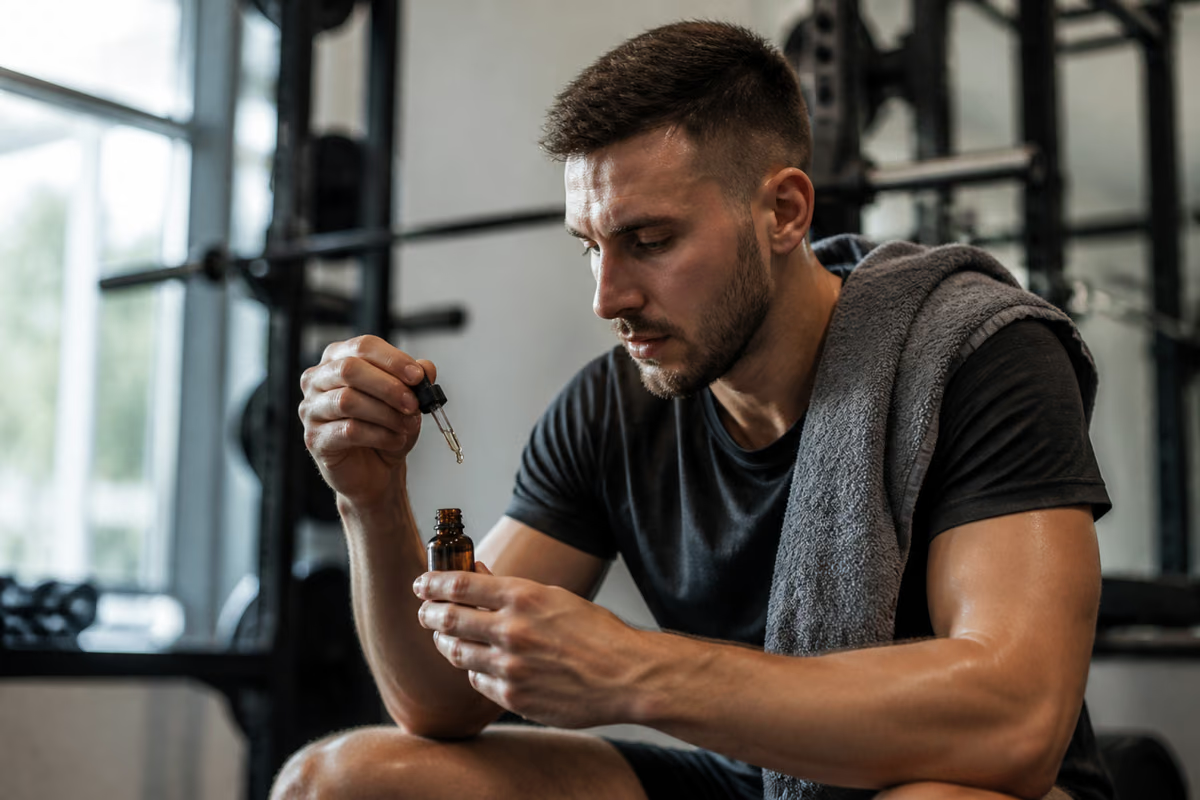
Yes, CBD appears to help athletes recover. A study led by researchers in Poland found that cannabidiol (CBD), a non-intoxicating compound from the cannabis plant, eases muscle soreness and lowers blood markers of muscle damage in the days after intense exercise. It does not, however, directly make anyone faster or stronger. That distinction matters because it undercuts decades of propaganda aimed at athletes, both the old argument and the new one.
From Propaganda Target to Research Subject
For decades, sports sat at the center of anti-cannabis messaging. Professional athletes are among the most visible people on the planet, so it was no accident that prohibition campaigns used leagues and players as their stage. The premise was simple and false: cannabis use is always harmful, for pros and amateurs alike.
That premise explains why athletes were hit so hard when caught. Failing a drug test because of THC (tetrahydrocannabinol, the main intoxicating compound in cannabis) meant public shaming. The athlete became a cautionary tale, and every headline reinforced the anti-cannabis narrative, whether audiences noticed or not.
The picture has shifted. Many professional sports leagues have now stopped testing for cannabis. At the same time, researchers are building evidence that cannabis compounds can actually benefit people who train hard. A recent Polish study on CBD and post-exercise recovery is one of the clearest examples. Its findings were published in the International Medical Journal and first reported by Marijuana Moment. From shaming to science: that's the trajectory we've been waiting for.
What the Polish CBD Study Found
The Polish researchers looked at how cannabidiol (CBD) affects the body after strenuous exercise. According to the authors, CBD "demonstrates efficacy in modulating delayed-onset muscle soreness (DOMS) and lowering concentrations of muscle damage markers (creatine kinase and myoglobin), particularly within the 48-72 hour window following intensive exercise." DOMS is the stiffness and pain that peaks a day or more after a hard workout.
The timing is the key detail. The 48-72 hour window is when soreness typically hits hardest and when athletes need to get back to training. Here's how the reported outcomes break down:
| Measure | What it is | Reported effect of CBD |
|---|---|---|
| Delayed-onset muscle soreness (DOMS) | Muscle pain and stiffness that peaks one to three days after intense exercise | Modulated, most notably at 48-72 hours |
| Creatine kinase | An enzyme that leaks from damaged muscle cells into the blood | Lower concentrations |
| Myoglobin | An oxygen-storing muscle protein released when muscle fibers are damaged | Lower concentrations |
| Athletic performance | Strength, speed or endurance output | No direct enhancement |
Recovery support without a performance boost is a narrow result, and an honest one.
Why "No Performance Boost" Matters
The Polish study concluded that CBD, a non-intoxicating cannabinoid, "does not directly enhance performance." A cannabinoid is one of the active chemical compounds produced by the cannabis plant. This finding is subtle but significant. Some cannabis opponents have quietly shifted their talking points from "cannabis harms athletes' health, so ban it" to "cannabis is a performance enhancer, so ban it." Evidence that CBD aids recovery without boosting output weakens that newer argument.
The Polish findings also fit a broader pattern. Data published in the Journal of Cannabis Research showed that people who exercise regularly often report using cannabis products to help them recover from physical activity. A separate study found that twice-daily topical CBD, meaning CBD applied directly to the skin, relieved chronic pain in former elite-level athletes.
Taken together, these results point to one thing. Cannabis compounds work as recovery tools, not shortcuts. For growers and enthusiasts who have argued that for years, the science is finally catching up.
Frequently asked questions
Does CBD help with muscle soreness after a workout?
According to a study led by Polish researchers, cannabidiol (CBD) helps modulate delayed-onset muscle soreness, the pain that builds a day or more after hard training. The effect was most noticeable between 48 and 72 hours after intensive exercise, which is when soreness usually peaks and recovery matters most.
Is CBD a performance-enhancing substance?
The Polish study concluded that CBD does not directly enhance athletic performance. It supported recovery by easing soreness and lowering muscle damage markers, but it did not increase strength, speed or endurance. That undercuts claims that cannabis should be banned in sport because it gives users an unfair competitive edge.
What are creatine kinase and myoglobin?
Creatine kinase is an enzyme and myoglobin is an oxygen-storing protein, and both normally stay inside muscle cells. When intense exercise damages muscle fibers, they leak into the bloodstream, so researchers use their blood levels as markers of muscle damage. The Polish study linked CBD to lower concentrations of both.
Can topical CBD relieve pain in athletes?
A separate study found that applying topical CBD twice a day eased chronic pain in former elite-level athletes. Topical products are applied directly to the skin instead of being swallowed or inhaled. The finding adds to growing evidence that CBD may help people dealing with the long-term physical toll of competitive sport.
Do professional sports leagues still test athletes for cannabis?
Many professional sports leagues have now stopped testing players for cannabis. That's a major change from the era when a positive THC test brought public shaming and served anti-cannabis campaigns. Policies still vary by league and governing body, so athletes should always check the specific rules that apply to their competition.



 United Kingdom