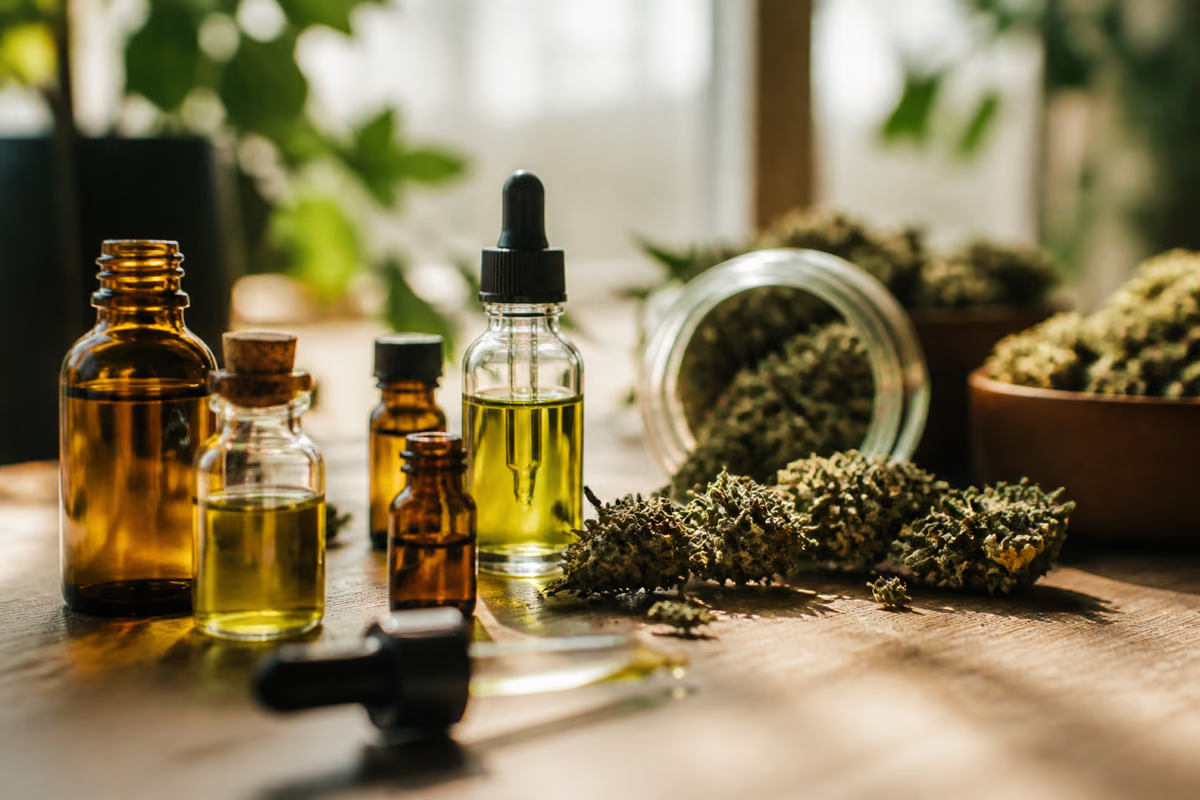
Yes, THC degrades at room temperature, and the loss becomes noticeable over time. CBD-only products stayed stable on the shelf. A new study published in Cannabis and Cannabinoid Research found that THC-rich products kept warm steadily convert into CBN. Freezing at -20°C preserved cannabinoids best, and CBD isolates and CBD-dominant products held up well even without refrigeration.
Cannabis products now cross borders, sit in warehouses and wait on shelves for longer than they used to. So if you grow, buy or sell cannabis, storage temperature affects what ends up in your jar or bottle.
Why cannabinoid stability matters in a global market
Legal cannabis is spreading across the globe, and national markets that used to be sealed off from one another are now linked through imports and exports. Consumers get more choice. Products also spend longer in storage and in transit, which gives producers, distributors and retailers new logistical problems to solve.
Cannabinoids are the active chemical compounds produced by the cannabis plant. The best known are THC, the main intoxicating compound, and CBD, which is non-intoxicating. These molecules change over time. Heat, light and oxygen alter their structure, and a product's real contents can drift away from what the label says.
The researchers behind the new study described what is at stake:
"The chemical stability of cannabinoids in Cannabis sativa plant material and formulated products is a critical factor for quality control, therapeutic efficacy, and regulatory compliance."
In practice, each of those three has its own consequences:
- Quality control: a product tested at 20% THC should not lose potency on its way to the consumer without anyone noticing.
- Therapeutic efficacy: medical patients depend on consistent dosing from one bottle to the next.
- Regulatory compliance: many jurisdictions require labelled cannabinoid content to fall within tight tolerances.
We care a lot about transparency, and an accurate label only means something if the product stays the way it was when it was tested.
How the researchers tested THC and CBD storage
The research team, based in the United States and Egypt, set out to evaluate cannabinoid stability across several product types, which scientists call matrices. A matrix is the physical material a cannabinoid sits in, such as dried flower, a concentrated extract or an oil. Each matrix exposes cannabinoids to air, light and other compounds in a different way, so the choice of matrix affects how they age.
The study covered four categories:
- Plant material: dried cannabis flower.
- Extracts: concentrated cannabinoid-rich material pulled from the plant.
- Oil formulations: extracts diluted in a carrier oil, the format common in tinctures.
- Isolates: a single cannabinoid purified on its own, in this case CBD and Δ9-THC (the standard intoxicating form of THC).
The team worked with three chemical profiles: one high in THC, one high in CBD, and one with a balanced 1:1 ratio of THC to CBD. Each formulation was kept for extended periods at room temperature, in refrigeration, or frozen at -20°C.
The stated goal was to "optimize storage guidelines." The researchers wanted to find out which temperature suits which product type, rather than settle on one rule for everything.
Why THC breaks down into CBN at room temperature
The main finding is that room temperature speeds up the conversion of THC into CBN. CBN (cannabinol) is a cannabinoid that forms mainly when THC degrades. It is only mildly psychoactive compared with its parent compound, so a jar of flower or a bottle of oil that drifts toward CBN gets weaker than intended.
The process behind this is oxidation, a chemical reaction in which a molecule reacts with oxygen and changes its structure. Heat supplies the energy that makes the reaction run faster, which is why ambient warmth does more damage than cold storage. Light and air exposure add to the effect. That explains the old grower advice to keep it cool, dark and sealed.
The researchers summarised the pattern this way:
"For the majority of cannabis-derived products, exposure to room temperature accelerated the degradation of THC into cannabinol (CBN), whereas storage at -20°C preserved cannabinoid integrity over the extended timeline."
CBD behaved differently. In this study, CBD-only products stayed stable over the long term even at room temperature. Because THC and CBD age differently, they need separate storage strategies.
Room temperature vs. fridge vs. freezer: the results compared
Stability depended on three variables together: cannabinoid profile, storage temperature and matrix type. The table below summarises the general direction of the findings for THC and CBD products under the three conditions tested.
| Product type | Room temperature | Refrigeration | Freezer (-20°C) |
|---|---|---|---|
| THC-rich products (flower, extracts, oils) | Highly susceptible; THC degrades into CBN | Intermediate protection | Best preservation of cannabinoid integrity |
| THC in ethanolic solution | Vulnerable to degradation | Intermediate protection | Highest stability of all THC-rich formats |
| CBD-only products and isolates | Robust long-term stability | Stable | Stable |
| Balanced 1:1 THC:CBD products | THC fraction still at risk | Intermediate protection | Recommended for long-term potency |
An ethanolic solution is a cannabinoid dissolved in ethanol, the type of alcohol used in many tinctures and lab standards. According to the researchers, THC-rich matrices were "highly susceptible to ambient degradation." The same matrices "exhibited the highest stability when formulated as ethanolic solutions and stored in the freezer."
The study did not single out refrigeration as a winner. The "intermediate" ratings in the table reflect the general principle that cooler storage slows degradation. For THC, freezing came out best.
Practical storage guidelines for THC and CBD products
The researchers concluded that "storage temperatures must match product composition." For businesses moving THC across borders, that means cold chain management: an unbroken sequence of temperature-controlled storage and transport from production to the final consumer. One warm stretch in a hot warehouse or a delivery van can undo weeks of careful handling.
For growers and consumers, the findings come down to a few simple rules:
- Work out the dominant cannabinoid first. Check whether your product is THC-rich, CBD-dominant or balanced before you decide where to store it.
- Freeze THC-rich extracts for long-term storage. The study found -20°C to be the best temperature, and that is the setting of a standard home freezer.
- Don't worry too much about CBD isolates. CBD-only products stayed stable at room temperature, so a cool, dark cupboard is fine.
- Store balanced products the way you store THC products. The THC fraction is still vulnerable even when CBD is present.
- Limit light and air. Airtight, opaque containers reduce the oxidation that turns THC into CBN.
If you've grown a good harvest, don't let a warm shelf take away what you worked for. A freezer and an airtight, opaque container will keep the THC you paid for.
Frequently asked questions
Does THC lose potency if stored at room temperature?
Yes. Research published in Cannabis and Cannabinoid Research found that most THC-rich products degrade faster at room temperature, with THC gradually converting into CBN. CBN is only mildly psychoactive, so a product stored warm for a long period will feel weaker than its original lab results suggest.
Is it safe to store CBD oil at room temperature?
In recent research, CBD-only products and CBD isolates stayed stable over the long term at room temperature. A cool, dark cupboard away from direct sunlight and heat sources is generally fine. Keep bottles tightly sealed, because air exposure can still affect the carrier oil over time.
What is the best temperature for storing THC extracts?
In a recent study, freezing at -20°C preserved THC best over the long term. THC dissolved in ethanol, as in many alcohol-based tinctures, was the most stable of all THC-rich formats when frozen. A typical household freezer runs at that temperature, so you can do this at home.
What is CBN and why does it form in old cannabis?
CBN, or cannabinol, is a cannabinoid that forms mainly when THC breaks down through oxidation. Heat, light and oxygen speed up this reaction. Aged or poorly stored cannabis often contains noticeably more CBN and less THC, so its effect is milder.
Should balanced THC and CBD products be refrigerated or frozen?
Store 1:1 THC and CBD products the same way you would store THC-rich ones. The CBD fraction may stay stable, but the THC fraction is still vulnerable to degradation at room temperature. Freezer storage at -20°C is the safest way to keep the intended cannabinoid ratio over long periods.
Why does cold chain management matter for cannabis exports?
THC-rich products degrade when they get warm, so they need to stay cold through shipping and warehousing. Cold chain management keeps temperatures controlled from producer to consumer. It protects potency and keeps labels accurate, and it helps companies meet regulations in markets with strict tolerances for cannabinoid content.






 United Kingdom